
Moving towards circularity
Beauty of Zero is our ambition for a future where beauty can have zero impact. Biodegradable ingredients are a fundamental element on the journey towards seeing this delivering via Zero Waste, as they enable circularity in product design with bio-based ingredients breaking down and being reincorporated into the environment.
Biodegradability data for ingredients allows beauty brands to communicate with confidence while staying ahead of growing expectations around waste and circular design. Learn how to use biodegradability data effectively to make credible claims for formulations, minimise risk and support smarter design decisions.
How to make biodegradability claims for beauty formulations
Biodegradability claims for beauty formulations can be extremely powerful to the end-consumer, if supported by robust data. Brands that communicate with clarity and confidence can create meaningful differentiation in the market.
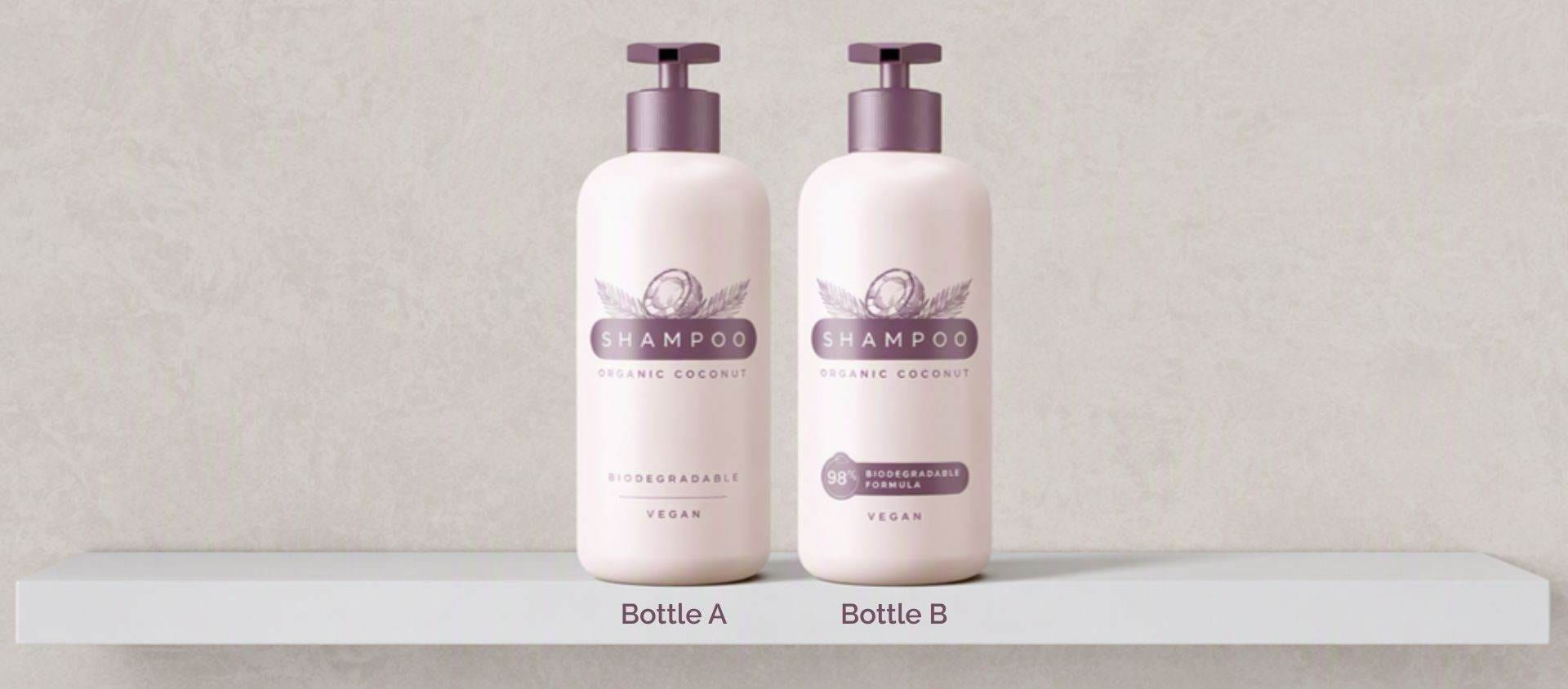
The bottles above show how labelling can differ. Bottle B does this better. The claim communicates clearly in multiple ways:
- It specifies biodegradability by the % of ingredients in the formula that are biodegradable. There are no standard biodegradability tests for complete beauty product formulations, so claims rely on the biodegradability of individual components.
- It specifies that the formula is the subject of this claim. Packaging is commonly referred to in biodegradability claims, so this language makes it clear.
Additions such as 98% of formula are critical to making this claim specific, transparent and measurable. It shows precisely how much of a formula is designed to break down into carbon dioxide, water, mineral salts and biomass after use
Why does biodegradability matter in beauty formulations?

To understand this, we must explore what happens to our beauty products after use. Many beauty products are designed to be washed away as part of everyday use. Afterwards, some ingredients in the formula will be removed during wastewater treatment processes, but others may pass directly into the environment.
We can't always control where our ingredients end up after use. For a Zero Waste future, we need to understand whether ingredients break down or persist in the environment, regardless of the route that they take. By choosing biodegradable ingredients, beauty brands can support more circular pathways and turn biodegradability data into a business advantage.
So how does biodegradability work?
To put it simply: Biodegradability is the ability of materials to be broken down into carbon dioxide, water, mineral salts and biomass by the natural action of microorganisms like bacteria. 1
Biodegradable substances can be solids or liquids, which biodegrade in different media (water, soil etc) but the main consumer takeaway is that they are intended to break down without persisting in the environment for extended periods. 2
How do you determine if a beauty formulation is biodegradable?
There is no standard biodegradability test available for complete cosmetic formulations. This is because, as mentioned above, what happens after use will vary for each ingredient.
Biodegradability testing for ingredients is carried out on a component level. This means, each component that makes up a cosmetic ingredient (ingredients are often blends of multiple component materials) has its own biodegradability status, rather than the cosmetic ingredient as a whole. Depending on the results for the components, a level of biodegradability is then assigned to the cosmetic ingredient. Some products have Water/Aqua in their INCI name; but water is not applicable for biodegradability testing and so does not count as a component.
How brands can leverage trusted expertise and make the most of biodegradability data
At Croda Beauty, we take biodegradability seriously. It's why we've assessed over 95% of our Beauty Care functional ingredients portfolio for biodegradability, with over three quarters of assessed ingredients being biodegradable.
Hundreds of biodegradability statements are available to download and they give all the necessary information to fully understand the biodegradability data that supports your ingredients. This includes:
- Biodegradability status for each component of the INCI
- Test method use and duration of test
- Biodegradation % result
Depending on how the ingredient performs in the test, there are different levels of biodegradability status. We've broken our biodegradability definitions down on every statement.
Sources
1. Ellen McArthur Foundation
2. Mintel