
What is conscious beauty?

Clean beauty
Understanding conscious beauty starts with understanding “clean beauty". Arguably the most impactful beauty industry trend of recent years, clean beauty is often perceived as a marketing buzzword, but it represents a significant paradigm shift in consumer expectations and product development.
At its core, clean beauty signifies a commitment to products formulated without a set list of ingredients perceived by consumers as potentially irritating, sensitizing, or harmful to human health or the environment. This list is ever-expanding and varies considerably between brands, countries, retailers, and even individual consumers. Common ingredients frequently excluded from clean beauty formulations include parabens, phthalates, sulfates (SLS/SLES), synthetic fragrances, certain preservatives (e.g., formaldehyde-releasing agents), polyethylene glycols (PEGs), silicones, mineral oil, and a host of others.
The clean beauty movement is driven by a consumer desire for transparency, safety, and sustainability. Unfortunately, it is also driven by a fear of complex-sounding, synthetic ingredients (known as chemophobia) and the naturalistic fallacy (if something is natural, it must therefore be good). This is amplified by beauty influencers who can be guilty of spreading misinformation and fear mongering certain ingredients. This leads to common misconceptions amongst the public such as “natural” automatically equating to “safe” and “clean”, while “synthetic” equals “toxic” or “dirty”.
These are not the only criticisms of the clean beauty trend. One of the biggest issues with it is that it has limited legal or standardised definition by any major regulatory body, which allows every brand and retailer to create its own arbitrary "free-from" or "dirty" list, leading to confusion and inconsistency for the consumer and even lawsuits.
Clean beauty has also been accused of greenwashing. Consumers may seek to remove ingredients that are harmful to the environment, but the lack of regulation within the term means that products marketed as clean may insinuate they are more sustainable than they are in fact.
It’s for these reasons that brands are seeking to move away from clean beauty claims and instead embrace conscious beauty.
How is conscious beauty different?

Conscious beauty aims to address the broader values that drove the clean beauty movement while avoiding the risk of misinformation and greenwashing. These broader values can be understood as:
- Transparency: Consumers demand to know what's in their products and, equally important, what's not. This includes clear ingredient lists, explanations of sourcing, and manufacturing processes.
- Safety: A primary driver is the perception of personal safety and well-being. Consumers are increasingly scrutinizing ingredient labels and seeking products they believe to be safer especially on sensitive skin.
- Sustainability & ethical sourcing: This may include sourcing ingredients with substantiated sustainability benefits, such as those with a reduced product carbon footprint or produced using more sustainable farming practices within a transparent supply chain. It could also involve adopting eco-friendly packaging, cruelty free practices, and vegan formulations.
The conscious beauty trend isn't just about ingredients; it stems from a holistic philosophy that resonates with a growing segment of the population seeking a more conscious and mindful approach to consumption. It represents a shift from purely performance-driven product selection to one that integrates health, environmental, and ethical considerations without sacrificing performance.
Conscious beauty vs clean beauty
| Feature | Clean Beauty | Conscious Beauty |
| Core definition | Focuses predominantly on "free-from" lists (e.g., parabens, sulphates, silicones), often based on a perceived rather than evidence-based risk. | Focuses on holistic and traceable ethics, encompassing ingredient efficacy, environmental, social, and economic impact. |
|
Safety |
Relies on a "negative list" implying that ingredients not on the list are inherently safe. Can perpetuate chemophobia. | Relies on scientific, regulatory evidence and risk-based assessment; includes safety for both the user and the environment (e.g., wastewater impact). |
| Ingredient sourcing | Generally requires ingredients to be 'natural' or 'naturally-derived' but often lacks transparency on how they are sourced. | Demands full traceability and is concerned with ethical impacts on e.g. labour, deforestation, animal cruelty, biodiversity, etc. |
| Natural plus | Limited Scope. If ingredients are synthetic, they must be considered "safe" based on the brand's 'free-from' list. | Embraces the potential that Green Chemistry and Biotechnology (fermentation, cell culture) can offer to address specific sustainability concerns, such as global food security. |
| Environmental impact | Narrow Focus. May simply look at biodegradability. Can inadvertently promote unsustainable harvesting of natural resources. | Comprehensive. Assesses the full product lifecycle, including water consumption, carbon footprint, packaging, and waste. |
| Ethical and social scope | Minimal. Usually limited to cruelty-free or vegan claims. | Extensive. Includes DEI (Diversity, Equity, and Inclusion) in testing and advertising, local community benefit |
Do consumers understand what conscious beauty means?
At this point, conscious beauty is more of an industry term than one consumers recognise. At events like Cosmoprof Bologna 2023, “conscious beauty” was highlighted by exhibitors to explain nuanced product safety and sustainability. (1) Consumers, especially those identified as “Skinics” in WGSN’s Beauty Personas 2025, are demanding the values behind conscious beauty but may not explicitly use or search for the term itself. (2)
Because of this, rather than focus on branding products as “conscious beauty” brands are encouraged to clearly define their parameters and communicate transparently to avoid mistrust and greenwashing. (3)
Who is the conscious beauty trend for?
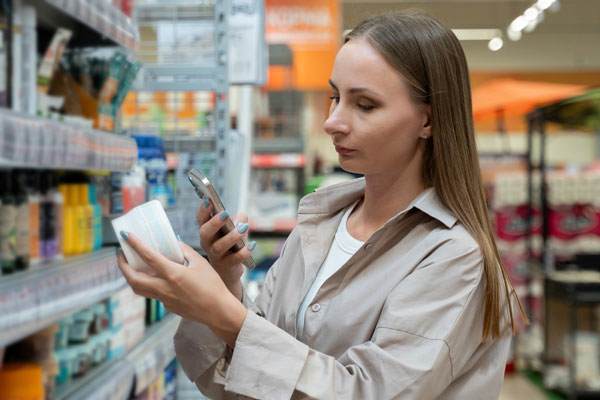
Conscious beauty appeals primarily to Millennials and Gen Z, however there is interest across all cohorts. Key sub-groups to keep in mind are:
- Values-First Shoppers: They are highly concerned with issues of sustainability, ethics, and social responsibility across all areas of their lives, and beauty is no exception.
- Highly Informed: They use online resources, blogs, and apps to research ingredients, scrutinise claims, and track their favourite brands, making them resistant to "claim washing."
- Safety and Health Focus: They prioritise products that are safe for both their personal health and the environment, pushing past "clean" to demand proof of ethical sourcing, carbon footprint reduction, and overall low impact.
- The "Underconsumption" trend: Many are shifting away from impulse buying and "trending" products, focusing instead on maximising value, multi-use products, and refills (a key element of conscious consumption).
What do brands need to know about marketing to the conscious beauty trend?
Transparency is by far the most important element to consider. Radical transparency is the goal, offering full cost breakdowns of ingredients, packaging, labour and freight.
This transparency needs to communicate a brands commitment to the ethical values of conscious consumers: reduced environmental impact; fairness; diversity, equity and inclusion.
How Croda can help you meet the conscious beauty trend
1. Transparency
At Croda Beauty, we are always advancing our transparency for customers and carry out thorough evaluations of our suppliers, helping us to offer in-depth data regarding the environmental impact of our products. With greater insight and data, brands and manufacturers can make better ingredient choices, devise formulations with improved footprints and provide the transparency demanded by clean beauty consumers.
To this end, we have calculated product carbon footprints for more than 1,550 of our Croda Beauty product codes, offering clarity and support to our customers. Our calculations consider cradle-to-gate emissions; i.e. they include composite Scope 1, 2, and Scope 3 upstream emissions data. More than 80% of these statements now also include carbon content and biogenic data.
The product carbon footprint methodology Croda Beauty follows is highly aligned with this guidance from TfS, meaning that we are using best practice that is specific to the chemical industry when measuring our product carbon footprint.
Understanding and utilising product carbon footprints can help companies quantify the climate impact of their product portfolio, create actionable and measurable targets that provide substantiation when communicating their decarbonisation initiatives, and drive real progress in their decarbonisation journey.
On top of this, they provide greater insight and transparency, giving buyers more confidence in their purchasing decisions.
As a customer of Croda Beauty, you can request a Product Carbon Footprint statement from your sales representative. Alternatively, you can submit a request through our online contact form.
2. Environmental commitments

We take our commitment to become Climate, Nature and People Positive by 2030 extremely seriously. This supports your ability to make credible, authentic and science-backed sustainability claims when you utilise Croda Beauty ingredients.
The partnerships we build with our suppliers are paramount. We are developing pathways, (for example with our botanical extracts) to source locally, both reducing our environmental impact and supporting local farmers. Each of our suppliers undergoes a selection process that ensures they meet strict ethical and environmental criteria.
As we move towards a predominantly biobased portfolio, we want to understand and respect the pivotal role of nature and biodiversity. We do this through collaboration with respected groups such as Action for Sustainable Derivatives (with whom we are founder members), the Roundtable for Sustainable Palm Oil and the Sustainable Castor Association. Croda aims to remove deforestation across its primary deforestation-linked commodities, with a target date of December 31, 2025.
Since 2019, we have had 14 field verifications performed by the Union for Ethical BioTrade (UEBT) within our botanicals supply chain. UEBT members, including Croda’s Le Perray site in France, which became a member in 2020, commit to ensuring that their sourcing practices gradually advance sustainable business growth, local development, and biodiversity conservation.
Using biotechnology, in particular ‘plant cell culture’, we are able to produce active cosmetic ingredients with substantiated efficacy and guaranteed reproducibility while significantly limiting our impact on biodiversity. A limited quantity of plant material is required to produce the active product, removing issues associated with conventional cultivation methods.
You can find out more on the “Our impact” page.
3. Product ranges
Our portfolios are constantly under active review to identify opportunities for transformation in alignment with our sustainability strategy. This creates product ranges that support brands who wish to make on pack conscious beauty claims with confidence and accuracy. Examples include:
- Our Phenoxy ethanol (PE)-free biopolymer range
- Active ingredients manufactured using Supercritical CO2 extraction, a highly performant solvent and pollutant free process. Ameyezing 4.0™ is a great example as it is sourced responsibly in Mauritius from a Fair For Life labelled organic farmer from an Ecocert For Life labelled responsible enterprise.
- Actives derived from plant cell culture such as Mel[o]stem™ which has a reduced impact on biodiversity compared to other manufacturing processes.
- Our extensive range of botanical extracts, particularly our Cosme-Phytami range which demonstrate proven active effects from “natural” botanical sources. We are the only botanical ingredient supplier in the cosmetics industry to Zeodration, which consumes 72% less kWh than lyophilisation to evaporate water, and 43% less than spray-drying, according to our own testing.
4. Formulation expertise
We have a bank of over 1500 formulations including formulations designed specifically to meet some of the concepts included in the “conscious beauty” umbrella such as: petrochemical-free, peg-free, phosphate-free, silicone-free, water conscious, and vegan suitable.
Additionally, our technical teams are always happy to support with specific formulation queries.
5. SenStories
Our SenStories tool is designed to match the language of the consumer and the formulator, turning consumer concepts like “light,” “soft,” and smooth into concrete formulations with specific emulsifier systems that achieve your desired sensory. Additionally, it also lets you filter for specific conscious beauty requirements like vegan suitable or RSPO palm.
References
1. https://www.wgsn.com/beauty/article/641984004f77b2bc08a441c3#page5
2. https://www.wgsn.com/beauty/article/63c7eaa781f2af8a38438a64#page9
3. https://www.wgsn.com/beauty/article/638a28fadb6ac2ee7ac48dd4#page8