Skin chronobiology: the hidden clock beneath our skin

Every day, our skin moves through its own rhythm; a biological symphony synchronised with the rising and setting sun. Like the brain and hormones, our skin operates on a circadian rhythm following a 24-hour internal clock that regulates protection, defence, repair and renewal.
 Chronobiology is the scientific study of biological rhythms and how they influence our body's functions. Skin chronobiology explores how the skin’s internal timing system shapes skin structure and function, including how it responds to skin care products.
Mastering the profound implications of chronobiology on skin allows brands to design products that work in harmony with the skin’s natural rhythm, which can in turn enhance both skin longevity and the visible performance of skin care products.
Understanding the skin’s biological rhythm
Every organ of our body, including the skin, has its own peripheral clock, synchronised by the central clock in the brain known as the suprachiasmatic nucleus (SCN).
In the skin, the peripheral clock is maintained by a network of genes such as CLOCK, BMAL, PER and CRY, that regulate key biological processes over a 24-hour cycle, hence, circadian cycle (from Latin, circa diem meaning about a day or 24 hours) (1). These molecular timekeepers dictate when skin cells:
- Divide and renew
- Produce lipids to strengthen the barrier
- Repair DNA damage from UV light
- Release antioxidants and immune mediators, etc…
The skin’s circadian clock is regulated by environmental cues such as light and temperature, as well as by internal signals, including hormones and metabolic rhythms driven by food-intake patterns. When synchronised, this system keeps the skin in balance (resilient by day, regenerative by night). When disrupted by such as stress, jet lag or irregular sleep, skin repair slows down, inflammation rises and ageing accelerates (2),(3) .
The skin’s 24-hour cycle and functions
Throughout the day, the skin’s activity varies hourly, shifting from defence mode during daytime to repair mode at night.
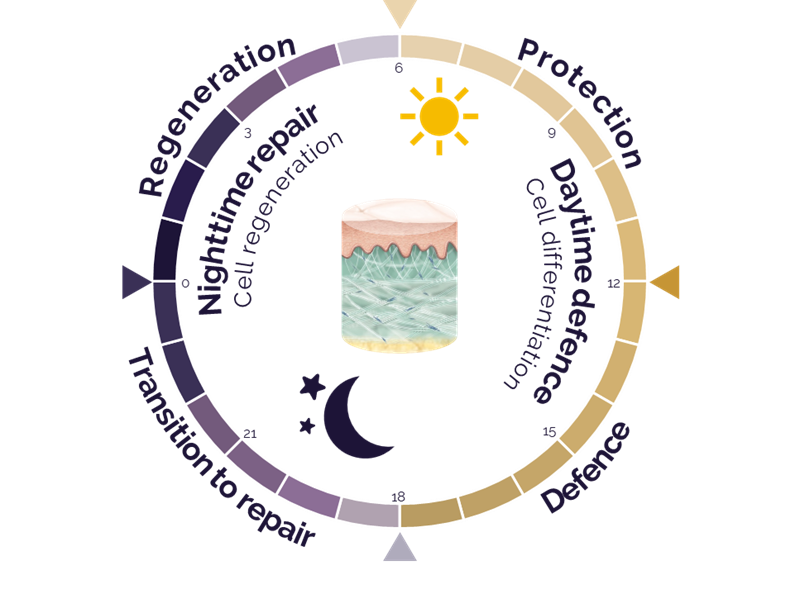
fig. 1 Diagram of the skin’s 24-hour cycle
In the morning, high CLOCK/BMAL1 expression upregulates antioxidant defence, protecting against sunlight and pollution-induced oxidative stress, while sebum production increases to strengthen the barrier.
During the afternoon, the skin maintains hydration and barrier stability while cell proliferation remains at its lowest. At the same time, PER and CRY gene transcription gradually increases, preparing the transition towards repair.
In the evening, the skin transitions to repair mode. Dermal vasodilation increases blood flow, enhancing the delivery of oxygen, nutrients and signalling molecules essential for regeneration. As PER and CRY gene expression peaks, CLOCK/BMAL1 activity is suppressed, leading to a temporary loosening of tight junctions and increased barrier permeability. Simultaneously, circadian-regulated lipid remodelling increases membrane fluidity, facilitating repair.
At night, keratinocytes and fibroblasts reach their peak activity as melatonin levels surge and DNA repair enzymes are upregulated. The synthesis of epidermal maturation and cornified envelope proteins intensifies, along with lipid, collagen and elastin production, working in concert to regenerate and restore the skin’s structure.
Towards dawn, CLOCK/BMAL1 transcription rises again, preparing the skin for a new resilient cycle.
Table 1. Simplified overview of the daily rhythm of skin clock gene expression and functional activity
| Time of day | CLOCK/BMAL transcription | PER/CRY transcription | Barrier function & permeability | Functional outcomes |
|---|---|---|---|---|
| Morning (6 a.m.–12 p.m.) | High | Low | Tight, cohesive barrier | Protection mode: strong tight junctions, high antioxidant gene expression, low fibroblast proliferation (minimal collagen and elastin synthesis) |
| Afternoon (12 p.m.–6 p.m.) | Declining | Rising | Stable barrier | Maintenance of defence, oxidative processes persist, early fibroblast activation |
| Evening (6 p.m.–12 a.m.) | Low | High (peak expression) | Barrier loosening, permeability increasing | Transition to repair: keratinocyte proliferation, ECM remodeling genes activate |
| Night (12 a.m.–6 a.m.) | Rising (repressed by PER/CRY) | Declining | Most permeable barrier | Full repair mode: maximal fibroblast activity, collagen & elastin synthesis, DNA repair, melatonin-driven antioxidant signalling |
This rhythmic balance between defence by day and repair by night is fundamental to maintaining skin longevity and optimising cosmetic benefits when skin care treatments are timed to the body’s natural clock (4) .
The importance of circadian rhythm in skin longevity
Healthy skin ageing depends on how efficiently the skin can repair damage and maintain its homeostasis. This process is tightly regulated by the circadian clock. The skin’s internal rhythm orchestrates essential metabolisms such as DNA repair, cell proliferation and barrier recovery to preserve tissue integrity.
When the skin’s clock is aligned, DNA repair enzymes, melatonin and matrix element synthesis operate optimally, supporting cellular renewal and antioxidant defence. By contrast, when the skin’s rhythm is disturbed (due to sleep deprivation, blue light exposure or chronic stress), oxidative damage accumulates, and skin barrier recovery slows down. Disrupted circadian signalling has been shown to further accelerate photoageing, inflammation and cellular senescence, leading to a duller, more fragile skin phenotype over time (5), (6).
Conversely, synchronising skin care and lifestyle with the skin’s natural cycles may extend its longevity, maintaining its homeostasis, resilience and health for longer.
Chronobiology-based skin care (or chronocosmetics) applied in alignment with biological rhythms has been shown to enhance DNA repair, antioxidant protection and product efficacy (7) .
Sync beauty routines with your skin’s natural rhythm
Chronocosmetics are advanced cosmetic formulations specifically designed to work in sync with skin’s biological timing. By synchronising active ingredients with the skin’s circadian rhythm, these products deliver targeted benefits when the skin is most receptive: day for protection, night for repair. Emerging innovations now include bio-synchronised delivery systems, ensuring active molecules are released exactly when the skin needs them most.
During the day, skin cells focus on defence, shielding against UV radiation, pollution and oxidative stress. An optimal morning routine should therefore include:
- Antioxidants such as Venuceane™, which protects cell membranes and DNA from sunlight-induced oxidation and Mel[o]stem™, which reduces oxidative stress in melanocytes to visibly fade both dark and white spots.
- UV filters like Solaveil™ Clarus, which provides broad-spectrum UV protection while maintaining complete transparency on the skin, thanks to a precisely controlled particle size distribution.
- Pollution shields like Citystem™, which limits skin penetration of airborne pollutants for smoother, softer skin.
- Barrier-strengthening lipids such as DS-Ceramide Y3S™, which helps maintain epidermal barrier homeostasis under diverse climatic conditions.
As night falls, the skin switches from protection to repair mode, becoming more permeable and biologically receptive. This is the ideal time for actives that stimulate renewal and recovery:
- Retinoids such as ReVitAlide™, promote cell turnover and regeneration. By protecting retinol from light, temperature and oxygen degradation, ReVitAlide ensures sustained activity and enhanced bioavailability through a time-controlled release system.
- Peptides and skin-regenerating actives such as Matrixyl™ and Majestem™ support extracellular matrix renewal to smooth wrinkles and maintain skin architecture.
- Hydrating and soothing actives like Optim Hyal™, a glycokine™ derived from hyaluronic acid, sustains the skin’s renewal for more supple, smoother skin. Phyt’Aura™ and Pacifeel™ modulate pro-inflammatory cytokines to calm sensitive skin and DS-CERAmix V™ stimulates epidermal maturation proteins, reinforcing the barrier overnight for optimal recovery.
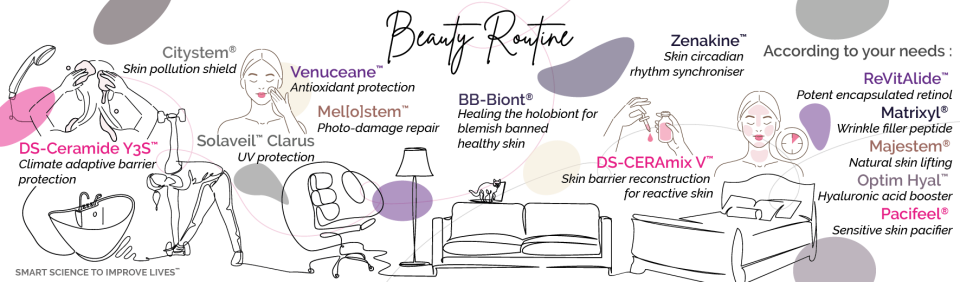
Fig 2. Example of a beauty routine aligned with the skin’s circadian rhythm
Ultimately, healthy skin follows a rhythm and skin care should too. Zenakine™, a postbiotic neurocosmetic active ingredient inspired by circadian science, represents the next generation of chronocosmetics. By synchronising key skin’s circadian biological markers (PER1, PER2, CRY2 and melatonin), it counteracts cortisol-induced clock disruption caused by chronic stress, restoring balance and enhancing skin longevity, sleep quality and overall well-being.
.jpg&mn=beauty&w=768&xr=0&yr=0&xfp=6&yfp=6&hash=552CFCEAB2E071DE244D3C1BCA9F6A1419C138999FEC74AA)